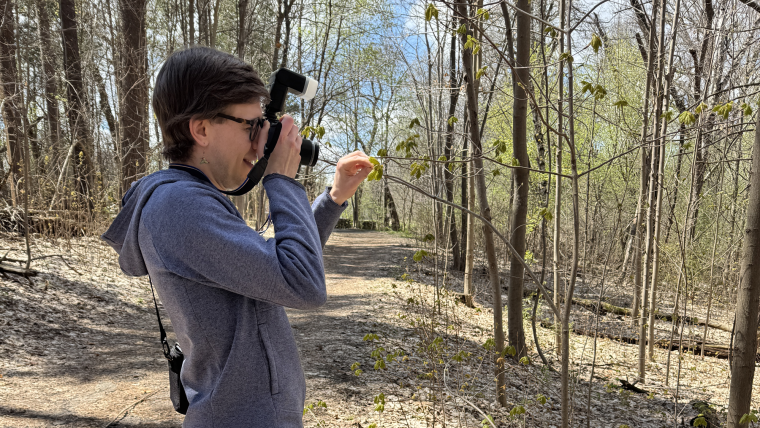
In this Observer Story written by UCLA student Kishan Talati, we learn about Nature's Notebook observer Sky Hershberger, a science communicator and the Forestry Communications Specialist at the University of Wisconsin–Madison Extension. This story was part of UCLA Faculty Dana Cairns Watson's course "Science Writing for Public Engagement and Community Science Projects." Students interviewed Nature's Notebook observers and then wrote a creative piece to tell the observer's story.
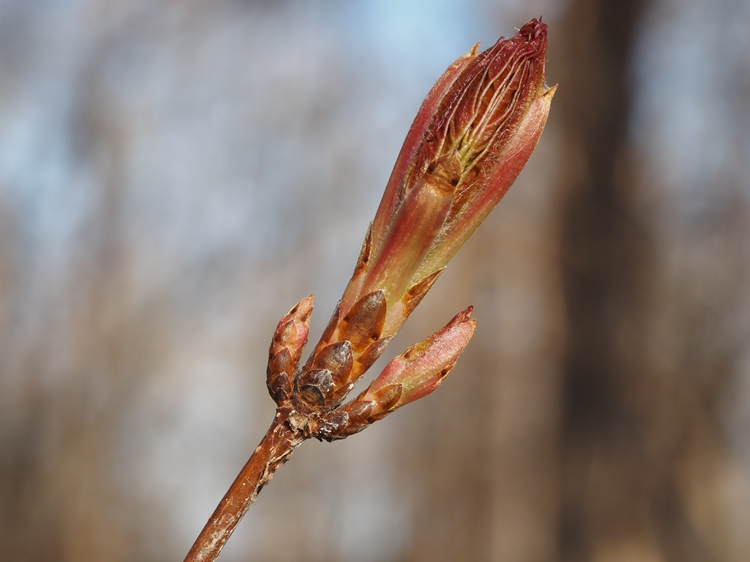
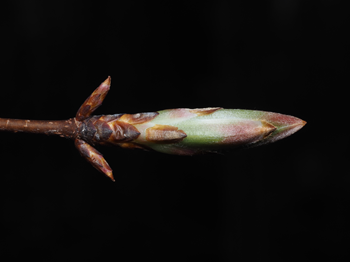
Every few days, Sky Hershberger walks three minutes from their front door into the woods. They are not going on a hike. They are simply checking on their maple trees. Over months of returning to the same spot, Sky has come to know these trees personally. They can recognize the trees by their seeds and the shape of their buds, even in winter when no leaves are present. Sky is there for something most people would walk right past. The moment a leaf bud breaks.
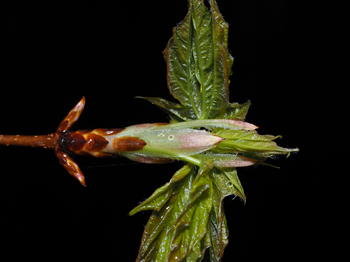
“Seeing how they expand bit by bit, and in that moment when they break and you can start to see the crumpled up leaves inside, that's really my favorite,” Sky says. Sky has written an essay about their favorite sugar maple, forming a close emotional connection after visiting this tree for nearly two years.
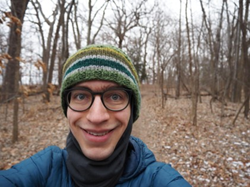
This is Sky Hershberger, a professional science communicator, jazz pianist, and the Forestry Communications Specialist at the University of Wisconsin–Madison Extension. They volunteer as a phenology observer for the USA National Phenology Network through Nature's Notebook. But long before any of that, they did not see themself as someone who paid attention to nature.
From Physics to Forestry
Growing up in the suburbs, Sky was drawn more to math and physics than to the natural world around them. They earned their bachelor’s degree in physics and mathematics at Washington University in St. Louis.
As an adult, Sky was increasingly drawn to the outdoors. While pursuing their master's in Science Communication, they began birding and working part-time on a project supporting Wisconsin maple syrup producers. That work introduced them to forestry, and particularly the process of identifying different species of maple trees. After completing their master’s degree, Sky continues working with UW–Madison Extension on a forestry team, turning what had started as curiosity into a core part of their professional work. Living near a 300-acre nature preserve on the University of Wisconsin–Madison campus, a short walk from their front door brings them directly into the woods. “I realized one day that these woods I had been walking through pretty frequently were just covered in maple trees,” they recall. “Bit by bit, I was starting to pay more attention to these details.”
Credits: Sky Hershberger
Image
|
Credits: Sky Hershberger
Image
|
Exploring the Preserve
Through their forestry work and desire to deepen their relationship with the natural world, they found out about Nature’s Notebook. In February of 2025, they chose 11 maple trees to follow through the season: five sugar maples, three boxelder maples, one silver maple, and two Norway maples.
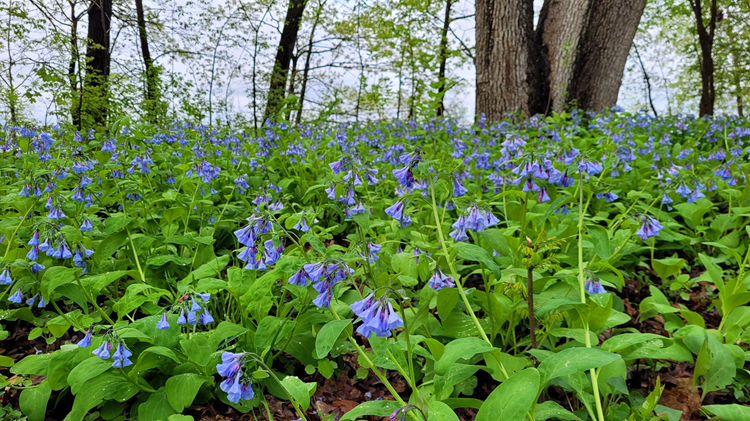
What Sky didn’t expect was how much the routine would change their outlook on nature. Returning to the same trees every few days, they began seeing things they had walked past their entire life. In our interview, Sky's face lit up describing the plants they started encountering along the way, such as trout lilies, Virginia bluebells, and mayapples covering the forest floor. "I wasn't looking for them," they say, "but because I was there and walking slowly and paying attention, I saw them." Slowing down turned subtle seasonal shifts into moments worth noticing.
The Science of Paying Attention
Sky points to the concept of plant blindness, the tendency for people to overlook and fail to distinguish plants in their environment. "I had it, too," they readily admit. By returning to the same trees and recording what they see, they have built a personal relationship with nature. "I know the locations of individual trees in Madison better than I know the locations of parking garages," they say with a laugh. The data they collect not only contributes to data for Nature’s Notebook but has also deepened their connection to Wisconsin’s nature.
Data collection has been “a nice convergence of the personal and professional” for Sky. They studied climate change communication for their master's degree, and it is a big part of what they do professionally. They were struck by the concept of shifting baseline syndrome, the idea that each generation accepts the environmental conditions of its childhood as normal. Tracking phenology, for them, is a personal act of resistance against that forgetting and establishing a stronger sense of place. After more than a year of observations, they have noticed that the Norway maple, an invasive species, drops its leaves later than the native sugar maples nearby, giving the Norway maple a competitive edge.
“Grounding and Centering”
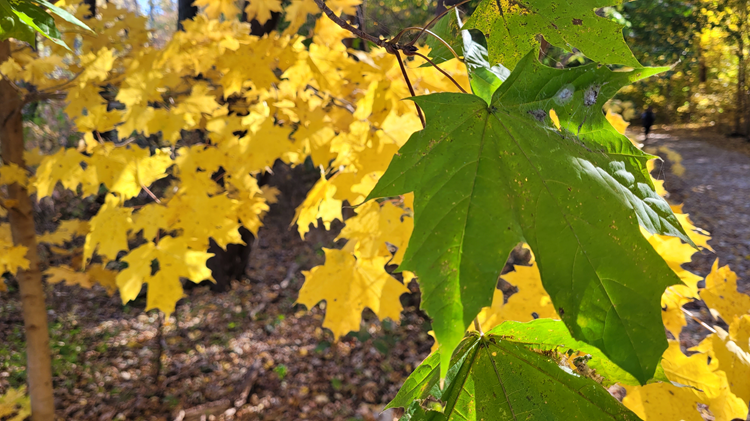
Now in their second year of observing, Sky has kept returning to that same favorite sugar maple, the first one they ever chose, waiting for them every few days at the end of a three-minute walk. They hope to keep returning to it for years to come, building their own personal record of what this particular patch of Wisconsin looks like across time. Gathering data for Nature’s Notebook has allowed Sky to savor the world around them and notice local environmental changes.
"We live in a fast-paced world," Sky says. "The act of observing something and coming back to it – it's grounding and centering."
Learn about author Kishan Talati:

Hi, my name is Kishan Talati, and I am a third-year student at UCLA. I love dancing, travelling, and hiking! This year, I am taking an English course, where we collect phenology data at our university’s native plants and wildlife habitat and gain a deeper appreciation for the nature around us. This article was written in response to one of our research projects on profiling a Nature’s Notebook volunteer.