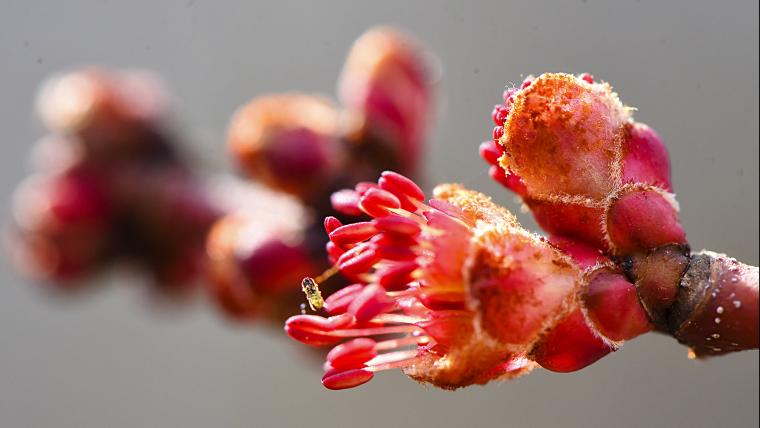
In this Observer Story written by UCLA student Audrey Wang, we learn about Nature's Notebook observer Caryn Beiter. Caryn is a long-time Local Phenology Leader at the Wells National Estuarine Research Reserve in Maine, where she seeks to provide opportunities for community members to contribute meaningful scientific data, grow their sense of place, and deepen their connections with the more-than-human world. This story was part of UCLA Faculty Dana Cairns Watson's course "Science Writing for Public Engagement and Community Science Projects." Students interviewed Nature's Notebook observers and then wrote a creative piece to tell the observer's story.
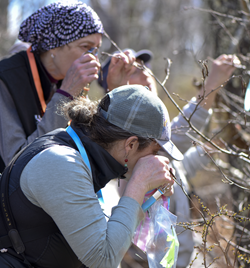
As I clicked into the Zoom meeting, I was met with a bright smile and warm greeting from a woman, all bundled up in a hat and jacket. That day, she told me, the high was expected to be around 41 degrees Fahrenheit. The long winter in Maine seems like a sharp contrast to the early spring here in sunny southern California.
Originally from land-locked Rochester, New York, Caryn Beiter studied marine and environmental biology as an undergraduate at the University of New Hampshire, also pursuing graduate study in conservation biology. After that, she moved often from coast to coast, discovering her passion for teaching outside. While leading field science programs in California, she and the students would make phenology observations of plants and animals using Nature's Notebook. For her, this experience revealed the engaging and connective potential of phenology programs. When she arrived in Wells, Maine to begin her work as the program coordinator at Wells National Estuarine Research Reserve, she began to think about how to bring phenology observation with her. Ultimately, this led her to found the Local Phenology Program in 2019.
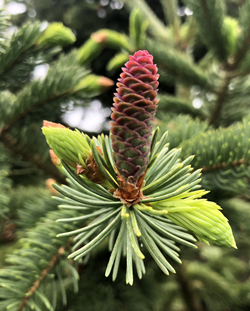
As a long-time phenology observer, both formal and informal, Caryn’s perspective was nuanced and influenced by her various experiences. As she described her experiences, I noticed the passion and care she held for the natural spaces and things around her. Above all, she emphasized how the study of phenology inspires awe and wonder– “I feel this when I observe. Sometimes you’re out there by yourself in this forest looking at this tiny thing that just burst open in the spring. You’ve been waiting, like it’s a friend, to see how they’re doing, and you go out there, and finally one day the flower has magically appeared.” Throughout our conversation, I noticed that she continued to fondly refer to the plants she observes as “friends,” a testament to her fondness for her natural surroundings.
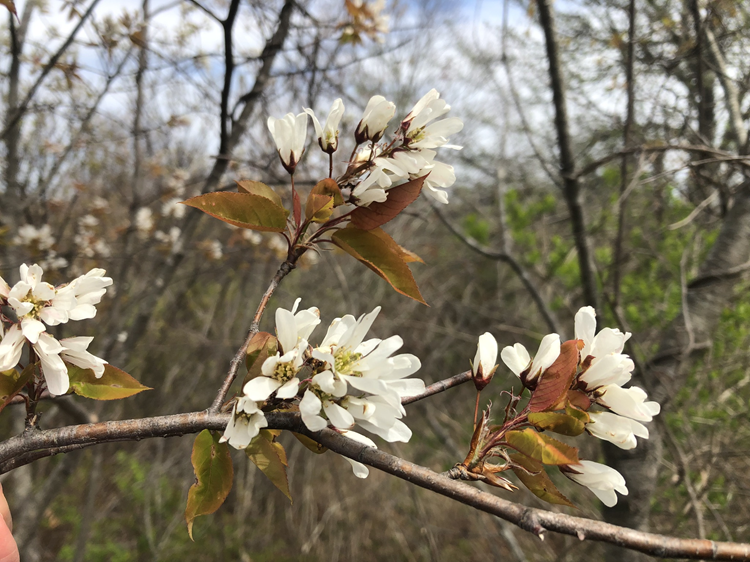
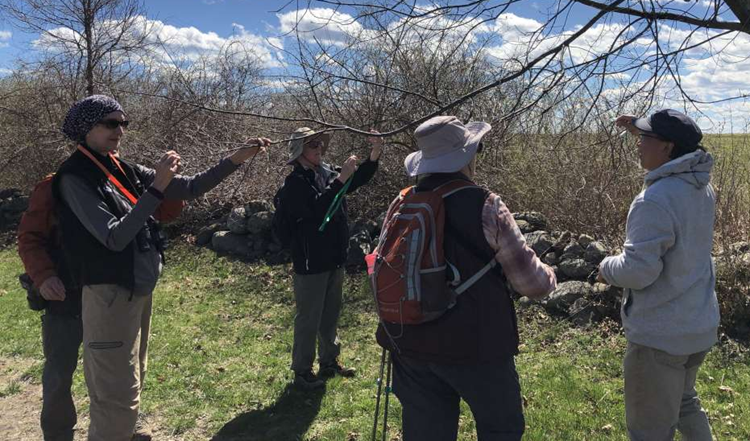
In addition to high-quality data collection, Caryn emphasized the importance of the interpersonal connections that phenology tracking can foster. Caryn and the six Wells Reserve phenology observers go on nature walks together, marveling at seeing new flower buds or plant growth, forming deeper connections with each other and their sense of place. In their time together, they’ve come up with inside jokes and tried out new activities together, from a book club to writing poetry. Caryn graciously shared a collection of their haikus, including one of my favorites:
“Warming breezes waft/ Phorsythia’s phair fragrance/ Our sinus laments.”
This one in particular included one of their phenology inspired in-jokes which replaces the letter “f” with “ph,” which I found especially amusing.
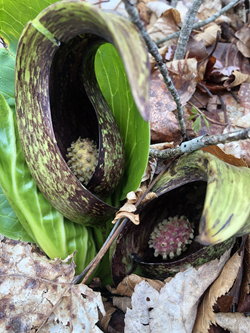
In addition, Caryn noted that taking time to observe, smell, touch, and record the growth and development of plants naturally helps kids and adults slow down, opening up a whole new world. Caryn emphasized the power of that awe and wonder with a quote she had read recently in a Nautilus article: “Numerous scientists also recalled moments of scientific discovery as sources of awe– and described how by making observations with their own eyes, they could relish a brief period when they are the only ones to see or to know something.” (Sean B. Carroll, Nautilus October 2025; https://nautil.us/more-than-a-feeling-1242661) Through her work, she hopes to foster that appreciation and slow attention in younger generations, especially those who are constantly exposed to the fast-paced Internet.
In the final minutes of our conversation, I asked her: “What do you wish more people knew about phenology?” Caryn noted that in our modern society, “Because so much of the resources and materials that most of us need are a drive down the street or at the click of a button, the connection to the land and the more-than-human world can feel distant - even though it is very much still intimately tied to our survival and wellbeing.” This disconnected relationship with the natural world is becoming more and more common, and bridging that gap again is the key to inspiring people to take a more active role in caring for their natural environment. As she put it, phenology study “leads to awe, curiosity, and wonder. It brings us closer to the planet, to this home that we’re a part of– it reminds us that we’re a part of nature, not separate from it.” Phenology observation doesn’t just improve mindfulness and individual mental health– it also encourages more environmentally minded behaviors, allows us to connect more deeply with others, and forms a more tangible sense of place.
Learn about author Audrey Wang:
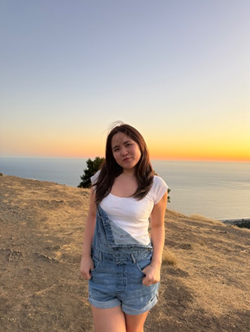
Audrey Wang is a second year UCLA student majoring in Human Biology and Society.