Sections
Body
Discover and Document Changes in Nature Near You
Track changes in the timing of plant and animal seasonal activity with the Nature's Notebook program. See what it’s like to be a Nature’s Notebook observer in this video from our partners at Audubon Starr Ranch:

Already an Observer?
YOUR OBSERVATION DECKBody

Join a Data Collection Campaign
Nature's Notebook Campaigns focus on species of particular interest to researchers and natural resource managers. Find a campaign near you to join!






Body
View Species
Sugar Maple
Acer saccharum
Common Milkweed
Asclepias syriaca
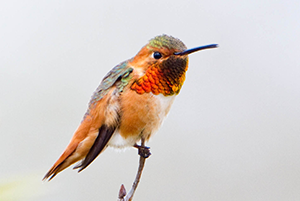
Allen's hummingbird
Selasphorus sasin
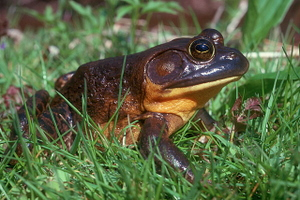
American Bullfrog
Aquarana catesbeiana
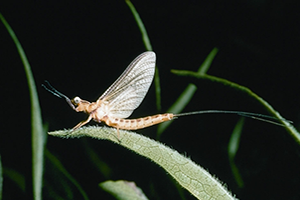
Mayfly
Hexagenia spp.
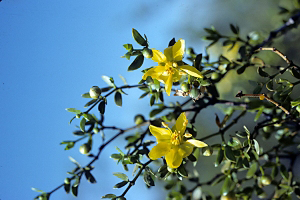
Creosote bush
Larrea tridentata
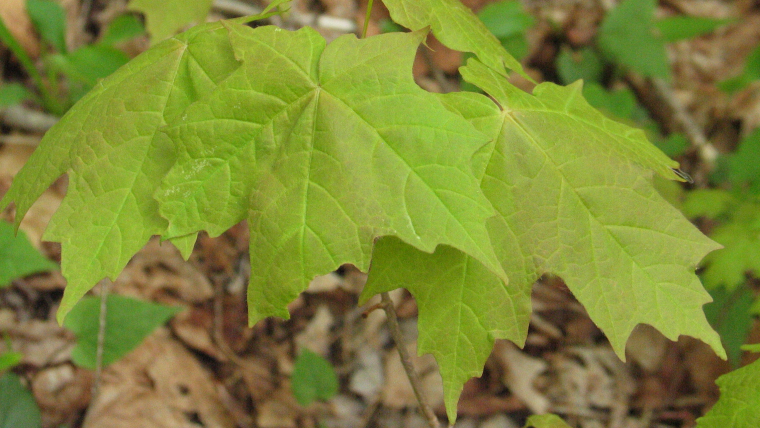
Plants with thinner leaves are more sensitive to warming temperatures
Thu, Sep 03, 2026
Temperature is important, but not the only factor in determining when plants leaf out in spring or lose their leaves in autumn. Species traits, like leaf size or thickness, also play an important role. To understand whether some plants may be more sensitive to increasing temperatures, researchers gathered data from warming experiments as well as observational data from Nature’s Notebook and a phenology network in China. They found that plants with thinner leaves and higher nutrient concentrations are more sensitive to temperature increases. These plants will typically leaf out earlier and lose their leaves later in warm years. Plants with thicker, longer-lived leaves are less likely to shift their growing seasons in response to warming temperatures. These results identified important patterns that can help refine predictions about how plant communities will respond to future climate change.
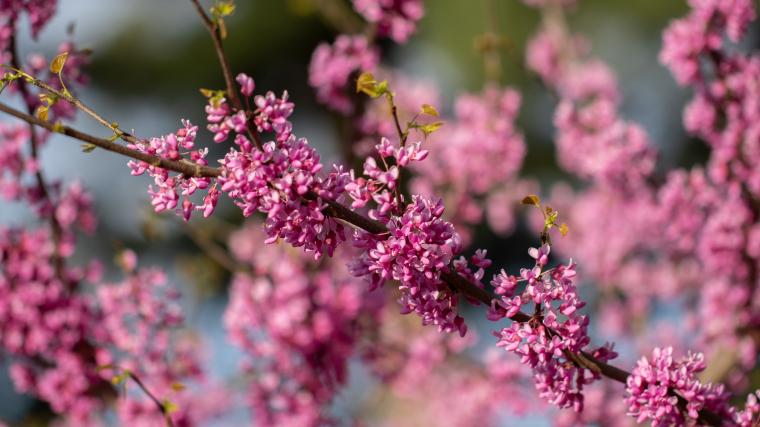
Nature’s Notebook data reveal how climate impacts flowering in eastern redbud trees
Sat, Jul 25, 2026
The appearance of bright pink flowers on eastern redbud trees is a reliable indicator that spring has arrived in the eastern U.S. However, the timing varies across the species’ range and not much is understood about the climate conditions that trigger flowering. A team of researchers used Nature’s Notebook observations from more than 150 sites across the eastern U.S. to identify how temperatures and daylength influence flowering in eastern redbuds. They used a novel modeling approach to show that both the amount of cold in winter and warmth in spring are important. However, the relative amount of cold and warmth needed to trigger flowering differed among sites. Trees in the north needed more cold and less heat to flower than trees in the south. Using these results, researchers can make accurate predictions about redbud flowering given recent climate conditions and better understand the potential impacts of climate change.
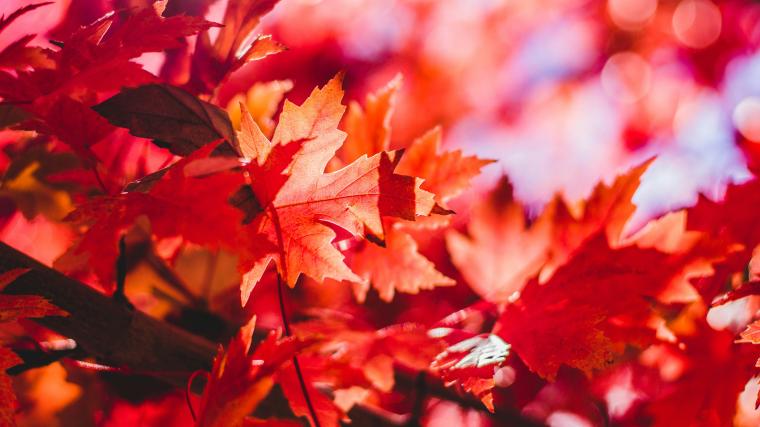
Weather impacts autumn phenology differently in the eastern and western U.S.
Mon, May 04, 2026
The timing of phenological events in autumn like leaf color and leaf fall have important consequences for nutrient cycling, species interactions, and even tourism. However, there has been less research on autumn phenology than spring phenology and the effects of temperature, precipitation, and day length are not well understood. To fill this gap, researchers used Nature’s Notebook observations of autumn phenology from woody plant species across the U.S. They found strong regional differences. Leaf color in the eastern U.S. was driven primary by summer temperatures, whereas in the western U.S., leaf color change was influenced more strongly by precipitation that occurred more than six months prior. Given these differences, the effects of climate change are likely to be complex. Increased temperatures may extend the growing season for some plants and increased drought may shorten the growing season for others.