Sections
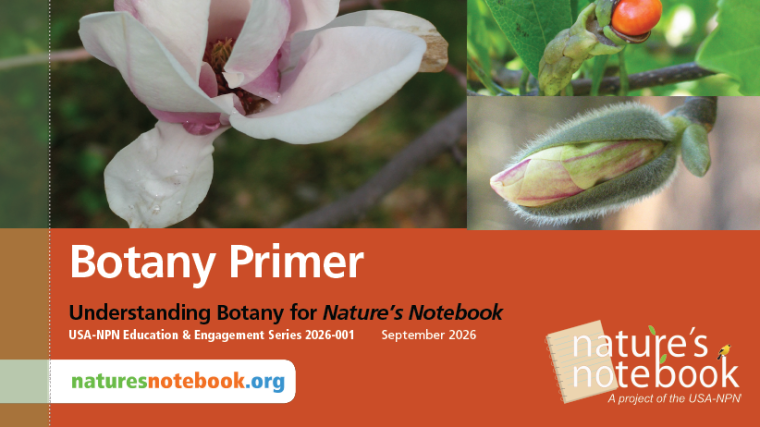
New ADA-compliant Botany Primer
Wed, Oct 14, 2026
We are pleased to share an updated version of our Botany Primer, an in-depth, photo-rich guide to understanding botany for Nature's Notebook. This version of the Botany Primer is compliant with the Americans with Disabilities Act (ADA) and the Rehabilitation Act and can be perceivable and navigable to people with disabilities.
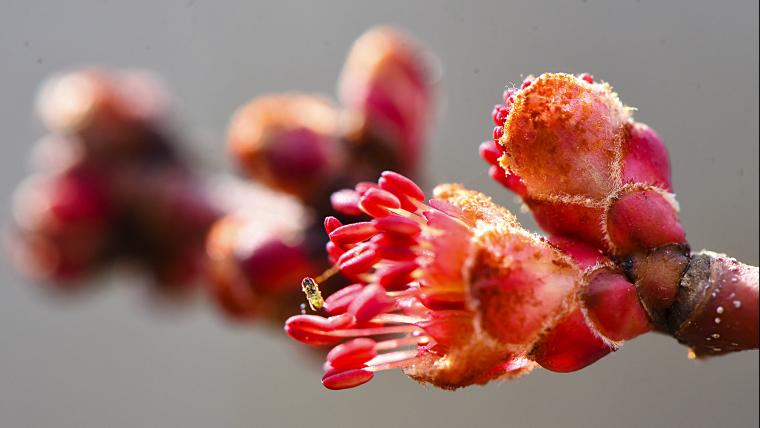
Observer Profile: An interview with Caryn Beiter
Wed, Oct 14, 2026
In this Observer Story written by UCLA student Audrey Wang, we learn about Nature's Notebook observer Caryn Beiter. Caryn is a long-time Local Phenology Leader at the Wells National Estuarine Research Reserve in Maine, where she seeks to provide opportunities for community members to contribute meaningful scientific data, grow their sense of place, and deepen their connections with the more-than-human world.
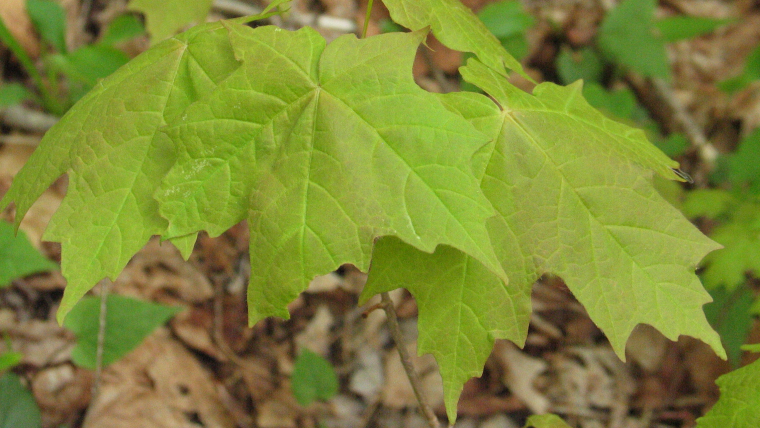
Plants with thinner leaves are more sensitive to warming temperatures
Thu, Sep 03, 2026
Temperature is important, but not the only factor in determining when plants leaf out in spring or lose their leaves in autumn. Species traits, like leaf size or thickness, also play an important role. To understand whether some plants may be more sensitive to increasing temperatures, researchers gathered data from warming experiments as well as observational data from Nature’s Notebook and a phenology network in China. They found that plants with thinner leaves and higher nutrient concentrations are more sensitive to temperature increases. These plants will typically leaf out earlier and lose their leaves later in warm years. Plants with thicker, longer-lived leaves are less likely to shift their growing seasons in response to warming temperatures. These results identified important patterns that can help refine predictions about how plant communities will respond to future climate change.