In a nutshell
Temperatures are rising particularly fast in the Northeastern U.S. as a consequence of anthropogenic warming, with implications for human health, local economies, and the environment. Documenting these changes and identifying how climate impacts vary across the region is important for community planning and mitigation efforts.
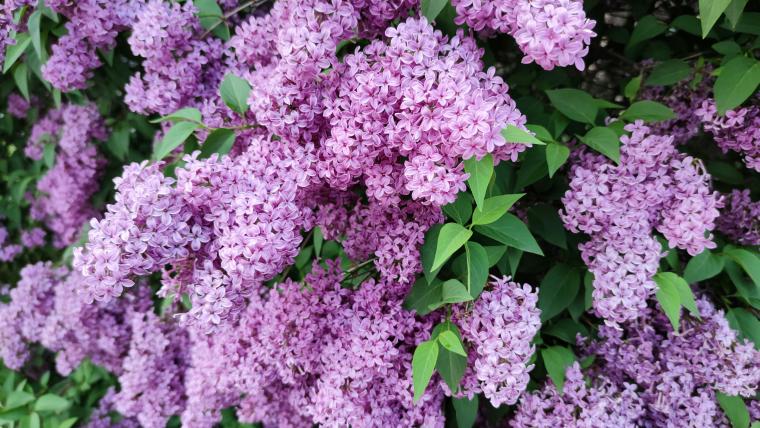
To understand changes that have occurred in New Jersey and surrounding areas since the mid-1960s, researchers gathered data on weather and plants in the region. They evaluated changes in daytime and nighttime air temperatures, sea surface temperatures, lake ice persistence, and winter snowfall. They also used Nature’s Notebook observations to see whether lilac phenology has changed over time. Lilac data in Nature’s Notebook include recent observations as well as historical observations that extend back to the 1960’s. Lilacs are among the first plants to leaf out and flower in the spring and serve as an indicator of the “start of spring.” They also form the basis for USA-NPN’s Spring maps.
The researchers found evidence of change in all the variables they studied. Since 1967, the New Jersey area has seen an increase in the number of hot summer days and nights and a decrease in winter severity and lake ice cover. Changes in weather have also resulted in the advancement of spring plant activity. On average, lilac leaves and flowers appeared 3.3 days earlier each decade.
What is special about this study?
Researchers used historical and contemporary Nature's Notebook observations of lilac plants in the New Jersey area to provide an accurate assessment of local changes in spring plant activity. When combining lilac observations with multiple climate variables, researchers documented significant changes in climate and detailed a wide range of ecological, economic, and cultural impacts.
What does this mean for YOU?
Documenting environmental changes – using Nature’s Notebook and other resources – can help us predict potential impacts to local communities. Temperature increases can affect public health, agricultural production, commercial fishing operations, and tourism. The advancement of spring is likely to affect plant-pollinator interactions and could result in longer pollen allergy seasons.
Citation: Cornish, A., A. Alguera, J.B. Shope, A.J. Broccoli, and J. Yates. 2026. Diverse indicators of climate change for New Jersey and Vicinity. Journal of Applied Meteorology and Climatology. https://doi.org/10.1175/JAMC-D-24-0188.1